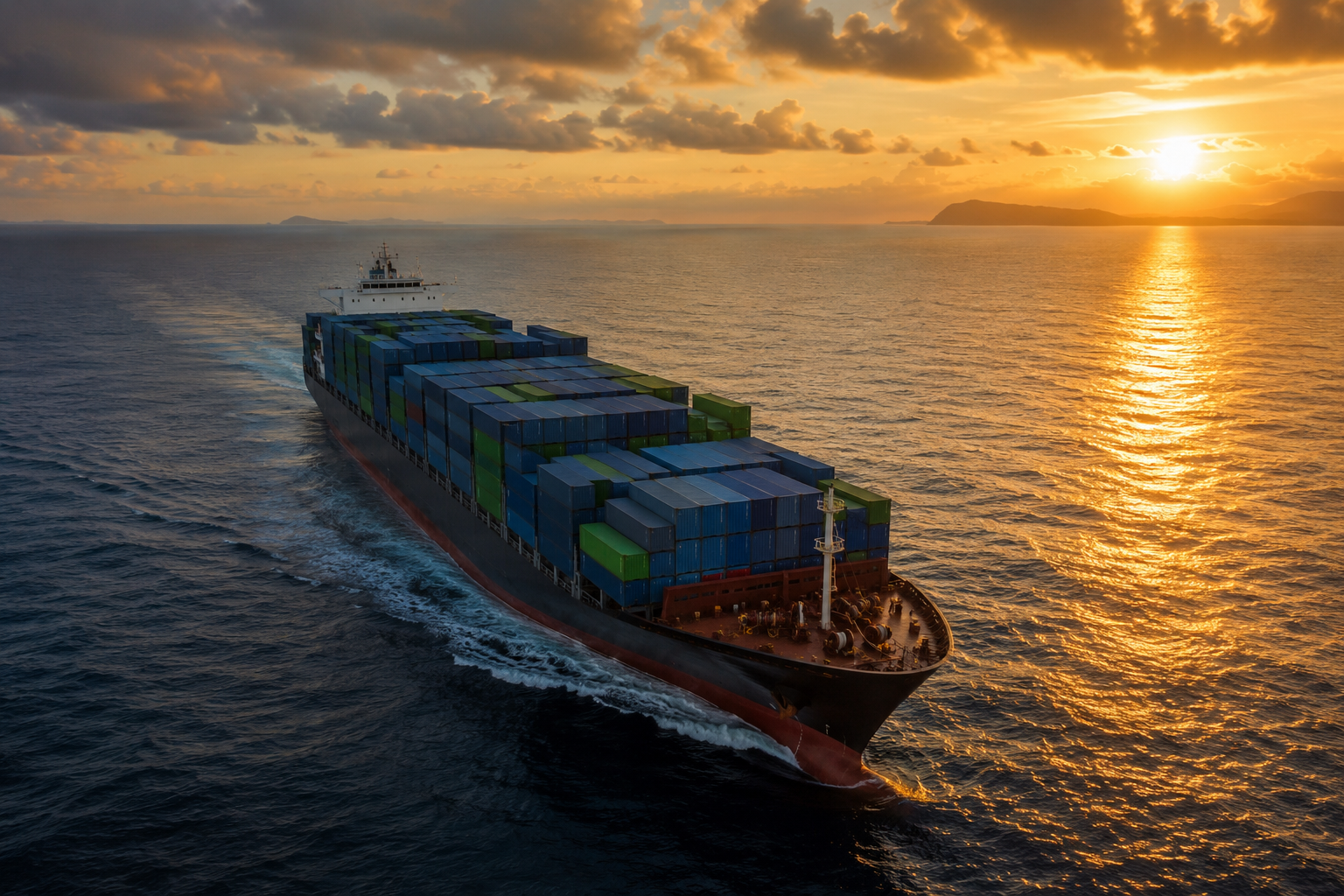
Sourcing products from China is one of the most common strategies for Amazon sellers worldwide. The cost advantages are real, the supplier ecosystem is vast, and the manufacturing quality — when managed correctly — can be excellent.
But getting your products from a factory in Shenzhen to an Amazon fulfillment center in the United States is rarely straightforward. Between shipping options, customs clearance, FBA Prep requirements, and Amazon’s strict receiving rules, there are dozens of points where things can go wrong — and where they often do.
This guide covers everything you need to know: the full shipping cycle from factory to Amazon shelf, how to choose between ocean and air freight, what FBA Prep actually requires, the difference between FBA and AWD, the most common and costly mistakes sellers make, and how to choose a logistics partner you can actually trust.
The Full Shipping Cycle: From Factory to Amazon Shelf
Most sellers think of shipping as a single step. In reality, it’s a chain of connected processes, and a failure at any one of them can delay your inventory, trigger Amazon penalties, or cost you thousands of dollars in additional fees.
Here is what the full cycle typically looks like:
- Factory production and quality check
Before anything is shipped, your supplier produces the goods. This is the right time to conduct a pre-shipment inspection — verifying quantities, dimensions, packaging compliance, and labeling. Skipping this step is one of the most expensive mistakes sellers make.
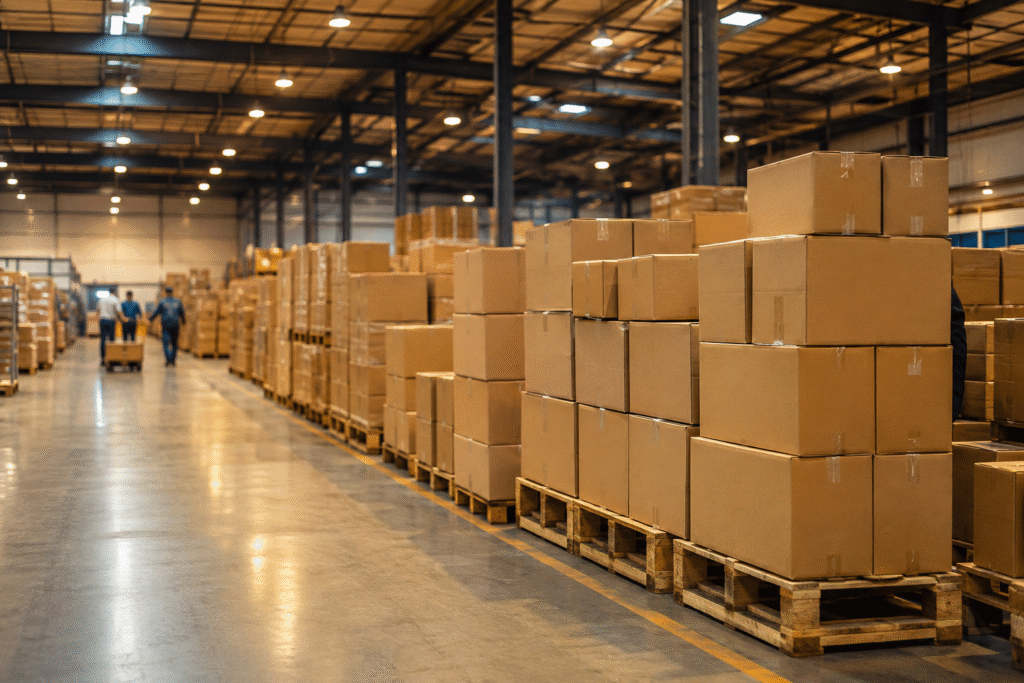
- Cargo pickup and consolidation in China
Once goods are ready, they are collected from the factory and either shipped directly or consolidated at a freight forwarder’s warehouse. For LCL (Less than Container Load) shipments, this is where your cargo is combined with other sellers’ goods to fill a container.
- Ocean or air freight to the US
The goods travel from China to a US port — typically Los Angeles/Long Beach for West Coast delivery or Newark for East Coast destinations.
- US customs clearance
Your shipment goes through import customs. You will need a customs broker, an Importer of Record (IOR), and all required documentation including the commercial invoice, packing list, and bill of lading.
- Drayage from port to warehouse or Amazon
After customs clearance, your cargo is picked up from the port and transported to either your 3PL warehouse or directly to an Amazon facility.
- FBA Prep (if needed)
Before inventory can be received at Amazon, it must meet specific labeling, packaging, and preparation requirements. This work can be done at origin, at a third-party prep center in the US, or — in some cases — at Amazon’s facilities for an additional fee.
- Delivery to Amazon FBA or AWD
Your prepared inventory is delivered to the designated Amazon fulfillment center or AWD distribution center, where it enters Amazon’s network and becomes available for sale.
Ocean Freight vs. Air Freight: How to Choose

One of the first decisions every seller faces is how to move their goods across the Pacific. There is no universal right answer — the best choice depends on your product, timeline, and margins.
Ocean Freight (FCL and LCL)
Ocean freight is the standard for most Amazon sellers. It is significantly cheaper per cubic meter than air, and for large or heavy shipments, it is often the only economically viable option.
- FCL (Full Container Load): You book an entire container — typically 20ft or 40ft. Best for large volumes, usually 15+ CBM. You pay a flat rate regardless of how full the container is.
- LCL (Less than Container Load): Your cargo shares container space with other shipments. You pay only for the space your goods occupy. Ideal for smaller volumes but comes with longer transit times due to consolidation and deconsolidation.
Transit time: 25–35 days from China to the US West Coast, 30–40 days to the East Coast.
Best for: Non-urgent restocks, heavy or bulky products, high-volume shipments where cost per unit matters most.
Air Freight
Air freight is fast and reliable, but the cost difference compared to ocean is substantial — typically 4 to 8 times higher per kilogram.
Transit time: 5–10 days door-to-door from China.
Best for: Small, high-value products where the cost of air freight is justified by margins. Emergency restocks when you are running out of stock on Amazon. New product launches where speed to market matters more than shipping cost.
Based on shipments managed by ARDI Express, sellers who switch from air to ocean freight for their regular restocks typically reduce their per-unit shipping cost by 60 to 80 percent — based on our client data. For high-volume products, this difference directly impacts profitability.
FBA Prep: What Amazon Actually Requires
Amazon has detailed requirements for how products must be prepared before they can be received at a fulfillment center. Non-compliant shipments are rejected, returned, or subject to additional fees that can run into hundreds or even thousands of dollars.
Here are the core FBA Prep requirements every seller needs to understand:
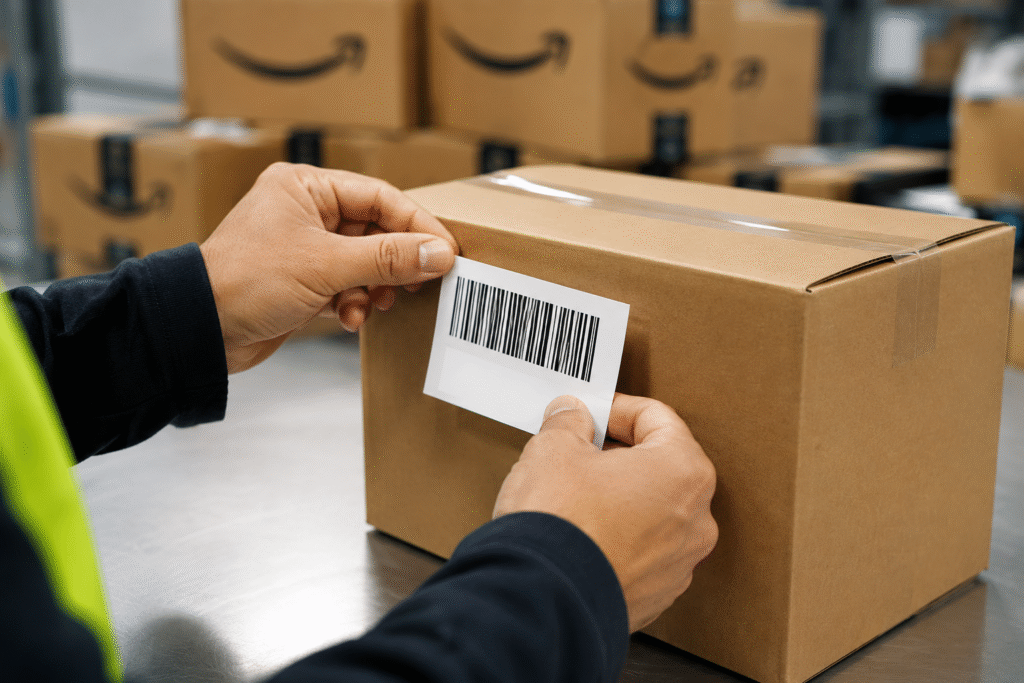
FNSKU Labeling
Every unit must have a scannable FNSKU barcode label. This is how Amazon identifies your specific product in their system. Labels must be applied correctly — covering any existing manufacturer barcodes and placed on a flat, clean surface.
Poly Bagging
Products that could cause suffocation — typically any item in a bag or pouch — must be in a sealed poly bag. The bag must include a suffocation warning printed directly on the bag or on a label. The warning text and font size requirements are specific and non-negotiable.
Bundling
If you are selling items as a multi-pack or bundle, all units must be clearly identified as a set and cannot be separated. The bundle must be labeled as a single unit with one FNSKU.
Box and Pallet Requirements
Each shipping box must weigh no more than 50 lbs (unless the item itself exceeds this weight). Boxes must be properly sealed with pressure-sensitive tape. If sending a palletized shipment, pallets must be standard 40″ x 48″, wrapped in plastic shrink wrap with barcodes visible on all four sides.
Carton Labels
Every carton must have Amazon’s shipment label applied on the outside. This label includes the shipment ID and destination fulfillment center. Cartons arriving without proper labels will be refused.
Over 500 clients and more than 50 containers per month processed by ARDI Express — the most common source of Amazon rejection is incorrect or missing FNSKU labels and poly bag compliance failures. These are entirely preventable with the right preparation process.
FBA vs. AWD: Understanding the Difference
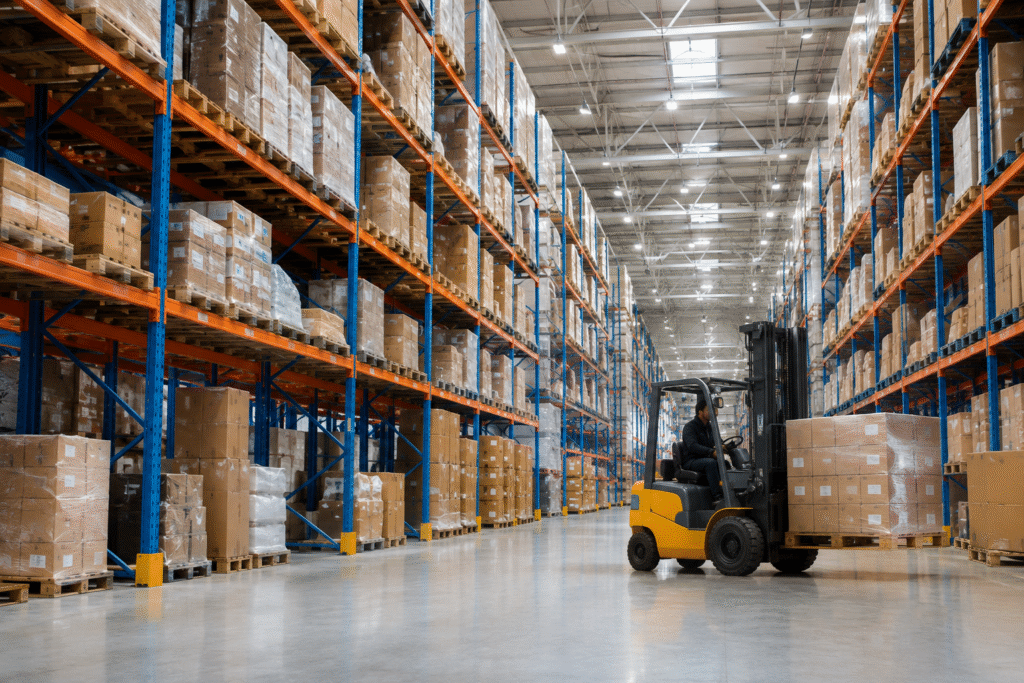
Amazon now operates two distinct types of receiving facilities, and understanding the difference is important for both logistics planning and cost management.
Amazon FBA (Fulfillment by Amazon)
FBA fulfillment centers receive your prepared inventory, store it, and ship it directly to customers when orders are placed. Inventory in FBA is Prime-eligible immediately upon receipt. FBA is the end destination for all inventory that gets sold on Amazon.
Amazon AWD (Amazon Warehousing and Distribution)
AWD is an upstream bulk storage layer that sits between your supplier and FBA. You send large palletized shipments to AWD at a lower storage rate. Amazon then automatically transfers inventory to FBA fulfillment centers as your stock sells down.
AWD is designed for sellers managing high inventory volumes who want to reduce FBA storage fees and avoid stockouts. However, inventory in AWD is not Prime-eligible until it is transferred to FBA.
Key difference for inbound logistics: AWD has stricter receiving requirements than standard FBA. AWD requires palletized shipments or floor-loaded containers via FTL/LTL/intermodal carriers — it does not accept small parcel delivery via UPS, FedEx, or USPS.
Real-World Examples: Mistakes That Cost Sellers Money
Theory is valuable, but real examples show what actually happens when the logistics process breaks down. Here are two situations ARDI Express has encountered and resolved.
Case 1: AWD Rejection Due to Wrong Delivery Method
A seller shipped inventory from China to an Amazon AWD facility in the United States. The last-mile delivery was arranged through a standard courier service — the same approach the seller had used for regular FBA shipments.
AWD rejected the shipment on arrival. The facility does not accept small parcel deliveries. The entire shipment was turned away and had to be redirected.
The seller contacted ARDI Express. We received the rejected inventory at our New Jersey warehouse, organized it onto proper pallets, scheduled a truck, booked a delivery appointment with the AWD facility, and delivered the goods successfully.
The result: The inventory was received. More importantly, this seller now ships all AWD-bound cargo through ARDI Express. We handle the last-mile logistics and ensure the delivery method matches Amazon’s requirements every time — so they never face this situation again.
Case 2: Shipment Stopped in China Due to Packaging Violation
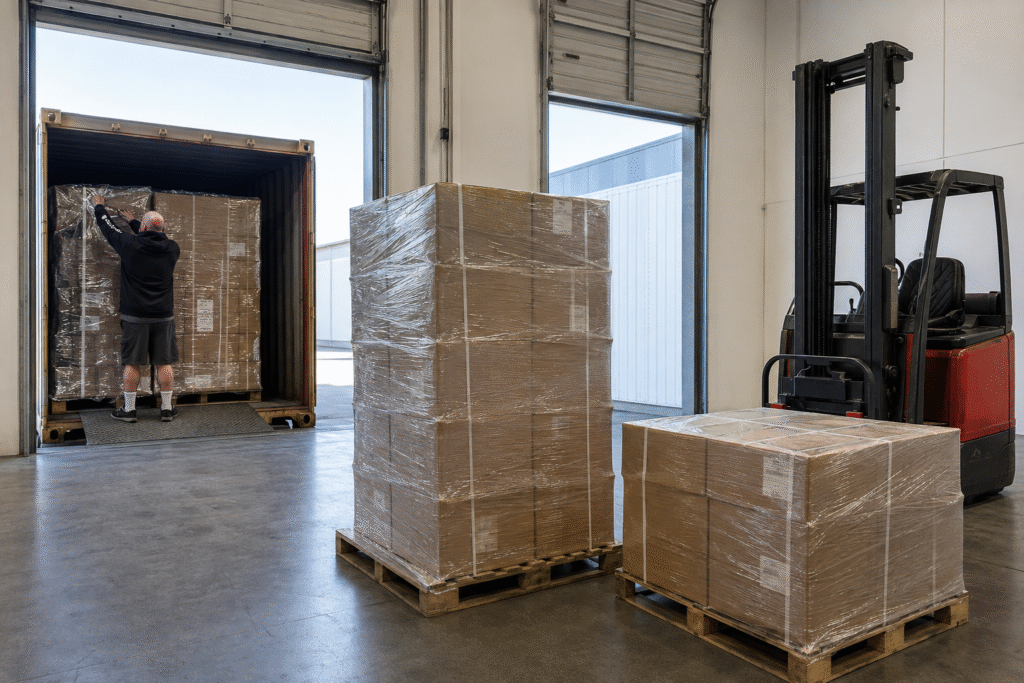
A seller was preparing a large shipment of over 1,000 cartons for delivery to Amazon FBA in the United States. When the cargo arrived at our consolidation warehouse in China for outbound processing, our team identified a problem: every carton had plastic strapping around it.
Amazon does not allow strapping on cartons. Strapped boxes are either refused at the fulfillment center or subject to additional handling fees. For a shipment of this size, the financial impact could have been significant.
Our team removed the strapping from all cartons at our China facility before the shipment was loaded. We also communicated directly with the seller and their factory about Amazon’s packaging requirements and how to prepare future shipments correctly.
The result: The shipment was delivered and received without issue. The factory now knows the correct packaging standards. The seller avoided potential rejection fees and the cost of re-delivery across the United States.
Facing a similar situation? Contact ARDI Express — we handle situations like these every week.
The Most Common Mistakes Amazon Sellers Make When Shipping from China
Beyond the specific situations above, here are the mistakes ARDI Express sees most frequently — and that cost sellers the most money.
- Skipping pre-shipment inspection. Problems found in China cost a fraction of what they cost once the goods arrive in the US. A $200 inspection can prevent a $10,000 problem.
- Incorrect or missing FNSKU labels. The single most common reason for Amazon rejection. Labels must be on every unit, correctly placed, and scannable.
- Using the wrong delivery method for AWD. AWD requires truck delivery via proper freight carriers. Sending via courier results in rejection with no exceptions.
- Ignoring carton weight limits. Cartons over 50 lbs are non-compliant. Amazon will either refuse them or charge additional handling fees.
- Poor communication with the factory about packaging standards. Factories that do not ship to Amazon regularly often use packaging that violates FBA requirements — strapping, staples, or non-standard box sizes.
- Choosing air freight for the wrong products. High-volume, low-margin products shipped by air can make a profitable product unprofitable. Always model the total landed cost before choosing your shipping method.
- Not accounting for customs clearance time. Many sellers underestimate how long customs can take, especially for first-time importers or products requiring additional documentation.
How to Choose the Right Logistics Partner
Your logistics partner is not just a vendor — they are a critical part of your supply chain. Choosing the wrong one can result in delays, unexpected costs, Amazon penalties, and lost sales.
Here is what to look for when evaluating a freight forwarder or 3PL for your Amazon business:
- Amazon FBA and AWD expertise. Your logistics partner should know Amazon’s requirements in detail — labeling, packaging, pallet standards, appointment booking, and AWD-specific rules. General freight experience is not enough.
- Proper licensing. For ocean freight to the United States, your freight forwarder must hold the required regulatory licenses and registrations. This is not optional — it is a legal requirement. Always verify your partner is properly licensed before entrusting them with your cargo.
- US warehouse presence. A partner with their own warehouses in the US — ideally near major ports — can handle last-mile logistics, FBA Prep, and problem resolution without involving additional third parties.
- China operations. A partner with a presence in China can manage factory pickups, consolidation, pre-shipment inspection coordination, and packaging compliance checks at origin before goods leave the country.
- Transparent pricing. Beware of partners who quote a low rate and then add fees for every additional service. Ask for an all-in quote that includes origin charges, ocean freight, destination handling, customs clearance, and last-mile delivery.
- Real communication. When your shipment is delayed or there is a problem at customs, you need a partner who responds quickly with clear information — not one who goes silent when things get complicated.
ARDI Express checks every box on this list. We have operated bi-coastal warehouses in Riverside, California and Edison, New Jersey for nearly a decade, serving over 500 active clients and handling more than 50 containers per month. We have a physical presence in China for origin-side management, and as an official Amazon SPN partner, every member of our team works exclusively with Amazon sellers. We have seen — and solved — almost every logistics problem described in this article.
Conclusion: Build the Process Before You Need It
Shipping from China to Amazon FBA is manageable — but only if you treat it as a system, not a series of one-off decisions. Every element of the chain matters: the freight method, the packaging compliance, the prep quality, the delivery method, and the partner you work with.
The sellers who scale successfully are not the ones who never make mistakes. They are the ones who build the right processes and work with partners who prevent problems before they happen.
If you are setting up your shipping process for the first time, or if you have experienced costly mistakes and want to fix the underlying issues, the most important step is to audit your current process against Amazon’s actual requirements — not against what you assume they are.
The details matter. The strapping on a carton. The delivery method to an AWD facility. The font size on a poly bag suffocation warning. These are not technicalities — they are the difference between inventory that gets received and inventory that gets rejected.
Build the process right from the beginning. Your margins will thank you.
Need help with international freight from China or Asia? Contact us at ardi-logistics.com
Need FBA Prep or warehouse services in the US? Contact us at ardiexpress.com
Frequently Asked Questions
How long does it take to ship from China to Amazon FBA in the United States?
Ocean freight takes approximately 25–35 days from China to the US West Coast and 30–40 days to the East Coast, not including customs clearance and last-mile delivery. Air freight takes 5–10 days door-to-door. Total lead time from order placement to available inventory on Amazon is typically 45–60 days for ocean and 15–20 days for air.
What is the difference between FBA and AWD for inbound shipments?
FBA fulfillment centers receive prepared, unit-level inventory that is immediately available for sale to customers. AWD receives bulk palletized inventory at a lower storage rate and automatically replenishes FBA as stock sells. AWD has stricter inbound requirements, including palletized or floor-loaded delivery via truck — small parcel delivery is not accepted.
Do I need a customs broker to import goods from China to the US?
While it is technically possible to self-file customs entries, the complexity of US import regulations makes working with a licensed customs broker strongly advisable for most sellers. Your freight forwarder can typically connect you with a customs broker or offer clearance as part of their services.
Can I send a floor-loaded container directly to Amazon AWD?
Yes — AWD accepts floor-loaded containers via FCL or LCL, as well as FTL and LTL truck deliveries. However, AWD does not accept small parcel delivery via carriers such as UPS, FedEx, or USPS. If you use Amazon’s Partnered Carrier Program, palletized freight is required.
What is FBA Prep and who can do it?
FBA Prep refers to the preparation work required to make your inventory compliant with Amazon’s receiving requirements — including FNSKU labeling, poly bagging, bundling, and box preparation. This work can be done at the factory in China, at a third-party prep center in the US, or at Amazon’s facilities for an additional fee. Using a dedicated prep center near a US port is often the most cost-effective and reliable option.
What happens if my shipment is rejected by Amazon?
If Amazon rejects your shipment, the cargo is typically returned to the address on file or held at the facility pending your instructions. You will need to arrange pickup, resolve the compliance issue, and rebook a delivery appointment. Rejection adds significant cost and delay — which is why getting the preparation right before the first delivery attempt is essential.
How do I know whether to use ocean or air freight?
The primary factors are cost, speed, and product characteristics. Ocean freight is 60–80% cheaper per unit than air (based on our client data) and is the right choice for most regular restocks of standard products. Air freight makes sense for high-value, low-weight products, emergency restocks, or new product launches where speed to market justifies the higher cost. Always calculate the total landed cost — including shipping, duties, and prep — before choosing.
About the Author
Vitalii Savryha is the Co-Founder of ARDI Logistics and Founder of ARDI Express — a bi-coastal 3PL and international freight forwarding operation serving Amazon FBA sellers, e-commerce brands, and importers across the United States. With over 20 years of experience in supply chain operations and a decade leading ARDI Group, Vitalii has built a logistics infrastructure that handles more than 50 containers per month and serves over 500 active clients. ARDI Express is an official Amazon SPN partner operating warehouses in Riverside, California and Edison, New Jersey.
This article was written exclusively for the Talents Boutique blog by the team at ARDI Express.