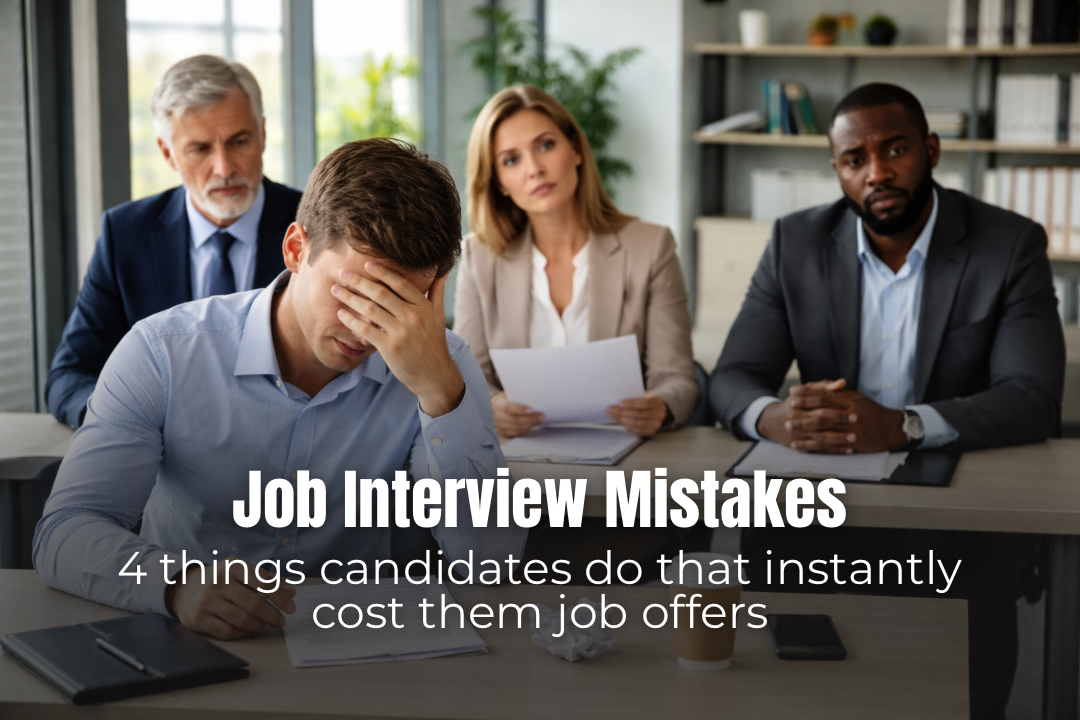
Job interview mistakes are common errors candidates make during interviews that reduce their chances of getting hired. Even experienced professionals can lose job offers if they fail to prepare, present measurable results, or communicate their experience effectively.
Job interview mistakes cost candidates opportunities every day — even when they have strong skills and relevant experience.
In today’s competitive hiring market, many professionals lose offers not because they lack expertise, but because they make avoidable job interview mistakes during the hiring process.
After conducting hundreds of interviews for eCommerce and digital roles, we continue to see the same patterns. Whether you’re applying for a Product Launch Manager, eCommerce Manager, Operations Lead, or marketing position, preparation and positioning often determine the outcome.
Below are some of the most common job interview mistakes — and practical strategies to avoid them.
Lorem ipsum dolor sit amet, consectetur adipiscing elit. Ut elit tellus, luctus nec ullamcorper mattis, pulvinar dapibus leo.
1. Speaking Without Numbers or Concrete Cases
One of the most common job interview mistakes is answering questions with vague, abstract statements.
Candidates often say things like:
“I improved performance.”
“I helped grow the brand.”
“We launched several products.”
While these statements sound positive, they lack measurable impact.
In competitive hiring environments — especially in eCommerce recruitment — numbers tell the real story.
Why Numbers Win Interviews
Hiring managers evaluate:
Revenue impact
Conversion rate growth
ROAS improvements
Product launch velocity
Market expansion
Cost optimization
Strong answers sound like:
“Launched 12 products in 9 months.”
“Increased revenue by 37% within 6 months.”
“Reduced CAC by 22% while scaling paid traffic.”
“Improved inventory turnover by 18%.”
Numbers build credibility and help candidates avoid one of the most damaging job interview mistakes — sounding impressive but proving nothing.
How to Prepare Your Metrics
Before the interview prepare a simple impact sheet:
Products launched
Revenue influenced
Growth percentages
Budget managed
Team size
Key wins and failures
This preparation dramatically strengthens interview performance.
2. Blaming Others for Failures
Another serious job interview mistake is shifting responsibility to other people.
Common examples include:
- “Management didn’t support me.”
- “My team wasn’t strong enough.”
- “Market conditions were bad.”
While external challenges exist, framing yourself as the only competent person in a broken system raises red flags.
What Hiring Managers Actually Look For
Companies value:
- Accountability
- Self-awareness
- Problem-solving mindset
- Leadership maturity
- Ability to learn from mistakes
Strong candidates structure their answers like this:
- Acknowledge the mistake
- Explain what happened
- Share what you learned
- Show how you improved the process
Example:
“I underestimated the launch timeline, which caused delays. I restructured our pre-launch checklist and implemented milestone tracking. Future launches were delivered 15% faster.”
Owning mistakes demonstrates maturity and helps candidates avoid critical job interview mistakes.
3. Not Researching the Company Before the Interview
Arriving unprepared is another classic job interview mistake.
A common opening question during interviews is:
“Did you get a chance to explore our company? What do you think about our products?”
Surprisingly, many candidates haven’t reviewed:
- The company website
- Product portfolio
- Recent launches
- Business model
- Target audience
- Competitors
For roles like Product Launch Manager or eCommerce Marketing Manager, failing to analyze the product you’re expected to grow signals lack of initiative.
Why Preparation Matters
Preparation signals:
- Professionalism
- Strategic thinking
- Genuine interest
- Respect for the opportunity
Lack of preparation signals:
- Indifference
- Poor attention to detail
- Low initiative
How to Prepare Properly
Before the interview:
- Analyze 2–3 core products
- Review pricing and positioning
- Study customer reviews
- Understand the company’s growth stage
This level of preparation helps eliminate one of the most avoidable job interview mistakes.
4. Not Asking Questions During the Interview
Interviews are two-way conversations. Yet many candidates finish interviews without asking questions.
This is another underestimated job interview mistake.
When candidates ask nothing, it often signals:
- Low engagement
- Lack of strategic thinking
- Desperation for any job
- Poor long-term fit
Smart Questions That Strengthen Your Position
- Who will I report to?
- Why is this position open?
- What does success look like in the first 90 days?
- What are the company’s growth goals this year?
- How is performance measured?
- How do teams collaborate internally?
Strong questions demonstrate:
- Long-term thinking
- Leadership mindset
- Strategic alignment
For senior roles in eCommerce, product management, and operations, thoughtful questions often influence hiring decisions.
Why Strong Candidates Still Lose Offers
In modern recruitment — particularly in fast-growing sectors like eCommerce, marketing, and product development — technical skills alone are not enough.
Candidates often lose offers because they make avoidable job interview mistakes, such as failing to:
- Demonstrate measurable results
- Show accountability
- Communicate strategic thinking
- Prepare thoroughly
Hiring decisions are rarely based on skills alone — they are based on perceived future performance.
Final Thoughts
Most professionals don’t lose job offers because they lack competence. They lose them because they make preventable job interview mistakes and fail to present their experience strategically.
A successful interview is not just about answering questions — it’s about positioning yourself as a solution to the company’s challenges.
Insights from recruitment practice, including experience shared by Talents Boutique, show that candidates who prepare metrics, research companies deeply, and demonstrate ownership consistently outperform equally qualified competitors.
And remember: strong candidates don’t just work harder — they prepare differently.